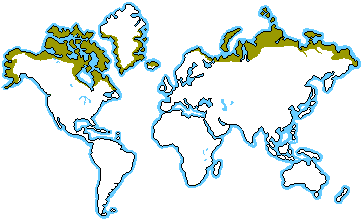
Did you know that the Arctic Tundra is the world's youngest biome? It was formed
10,000 years ago. Located at latitudes 55° to 70° North, the tundra is a vast and
treeless land which covers about 20% of the Earth's surface, circumnavigating the
North pole. It is usually very cold, and the land is pretty stark. Almost all tundras are
located in the Northern Hemisphere. Small tundra-like areas do exist in Antarctica in
the Southern Hemisphere, but because it is much colder than the Arctic, the ground
is always covered with snow and ice. Conditions are not right for a true tundra to
form. Average annual temperatures are -70°F (-56°C).
Tundra comes from the Finnish word "tunturia", which means a barren land. The
ground is permanently frozen 10 inches to 3 feet (25 to 100 cm) down so that trees
can't grow there. The bare and sometimes rocky ground can only support low
growing plants like mosses, heaths, and lichen. In the winter it is cold and dark and
in the summer, when the snow and the top layer of permafrost melt, it is very soggy
and the tundra is covered with marshes, lakes, bogs and streams that breed
thousands of insects and attract many migrating birds.
The main seasons are winter and summer. Spring and fall are only short periods
between winter and summer. The tundra is the world's coldest and driest biomes.
The average annual temperature is -18° F (-28° C). Nights can last for weeks when
the sun barely rises during some months in the winter, and the temperature can
drop to -94° F (-70° C). During the summer the sun shines almost 24 hours a day,
which is why the Arctic is also called the Land of the Midnight Sun. Summer are
usually warm. Temperatures can get up to 54° F (12° C), but it can get as cold as 37°
F (3° C). Average summer temperatures range from 37° to 60°F (3° to 16°C).
The Arctic tundra is also a windy place and winds can blow between 30 to 60 miles
(48 to 97 kilometers) per hour. Of the North American, Scandinavian and Russian
tundras, the Scandinavian tundra is the warmest, with winter temperatures
averaging 18°F (-8°C)
The tundra is basically like a desert when it comes to precipitation. Only about 6 - 10
inches of precipitation (mostly snow) fall each year. Below the soil is the tundra's
permafrost, a permanently frozen layer of earth. During the short summers the top
layer of soil may thaw just long enough to let plants grow and reproduce. Since it
can't sink into the ground, water from melting permafrost and snow forms lakes and
marshes each summer.
There is barely any vegetation in the tundra, only about 1,700 different species,
which isn't very much. These are mostly shrubs, sedges, mosses, lichens and
grasses. There are about 400 varieties of flowers. The growing season is only about
50 to 60 days long. There are no trees, except for some birches in the lower
latitudes. The ground is always frozen beneath the top layer of soil, so trees can't
send their roots down. Willows do grow on some parts of the tundra but only as low
carpets about 3 inches (8 cm) high. Most plants grow in a dense mat of roots which
has developed over thousands of years. The soil is very low in nutrients and
minerals, except where animal droppings fertilize the soil.
Surprisingly there are animals in the tundra. Although there isn't a lot of biodiversity,
only 48 species of land mammals are found on the tundra, there are a lot of each
species. These consist of slightly modified shrews, hares, rodents, wolves, foxes,
bears and deer. There are huge herds of caribou in North America (known as
reindeer in Eurasia) which feed on lichens and plants. There are also smaller herds
of musk-oxen. Wolves, wolverines, arctic foxes, and polar bears are the predators
of the tundra. Smaller mammals are snowshoe rabbits and lemmings. There aren't
many different species of insects in the tundra, but black flies, deer flies,
mosquitoes and "no-see-ums" (tiny biting midges) can make the tundra a miserable
place to be in the summer. Mosquitoes can keep themselves from freezing by
replacing the water in their bodies with a chemical called glycerol. It works like an
antifreeze and allows them to survive under the snow during the winter. The marshy
tundra is a great place for migratory birds like the harlequin duck, sandpipers and
plovers.
The tundra is one of Earth's three major carbon dioxide sinks. A carbon dioxide sink
is a biomass which takes in more carbon dioxide than it releases. Carbon dioxide is
a greenhouse gas that contributes to global warming. During the short summer
tundra's plants take in carbon dioxide, sunlight and water in the process of
photosynthesis. Plants normally give off carbon dioxide after they die and
decompose. But because of the short, cool summer and freezing winter
temperatures, plants can't decompose. Remains of plants thousands of years old
have been found in the tundra permafrost. In this way the tundra traps the carbon
dioxide and removes it from the atmosphere. Today global warming is melting the
permafrost of the tundra and every year several feet of tundra are lost. As the
tundra melts, the plant mass decomposes and returns carbon dioxide to the
atmosphere.
The tundra is a very fragile environment. The extremely cold temperatures makes it
a difficult environment to survive in during the winter, and plants and animals have
a hard time coping with any extra stresses and disturbances. More people moving
to the tundra to work in the mines and oil rigs have created towns and more roads.
Some animal's movements to traditional feeding and denning grounds have been
disrupted by these obstacles. When they try to pass through a town they are often
scared away or shot. With their feeding patterns disrupted, many polar bears have
starved. The Alaskan oil pipeline was built across a caribou migration route. In some
places the pipeline has been raised above the ground so the caribou can pass
under it. Pesticides have been used to control the hordes of insects. Thousands of
migrating birds come to the tundra because of the abundant insects. Through the
food chain the pesticides reach many of the animals that live on the tundra.
Pollution from mining and drilling for oil has polluted the air, lakes and rivers. The
land around some nickel mines in Russia has become so polluted that the plants in
the surrounding area have died. Footprints and tire tracks can be visible for many
years after they were made. When the sun hits the ruts it causes the permafrost to
melt. This causes erosion and the ruts get bigger, and eventually the ruts turn into
gullies. Tracks made during WW II have grown so large that some of them are now
lakes.
The tundra is not a cold and useless wasteland. It is a very fragile environment and
the plants and animals that have made their home on the tundra biome have made
some incredible adaptations to the long, cold winters and the short but abundant
summers. They live on a precarious edge and the smallest stresses can bring about
their destruction.
Health Issues
The tundra has a very extreme climate. The intense cold presents many problems if
you are not prepared. In any situation where extreme cold is present, hypothermia is
a risk you take. Hypothermia is the lowering of the body's core temperature. There
are two types of hypothermia, acute and chronic. Acute hypothermia is the rapid
lowering of the body's core temperature. Chronic hypothermia is the slow lowering
of the body's core temperature. If the temperature drop occurs in less than four
hours it is acute, otherwise it is chronic. Acute hypothermia is also called immersion
hypothermia and typically occurs when a person is in cold water. It is important to
note the difference between the two since treatment will be different. Hypothermia
is considered severe when the body's core temperature drops below 90 degrees F,
and mild from normal body temperature to 90 degrees F.
Frostbite is another problem in areas of extreme cold. Frostbite is caused by
exposure to severe cold. Frostbite occurs more often when the wind is blowing,
quickly taking heat from the body. The ears, cheeks, nose, toes, and fingers are
frostbitten the most frequently. When the part of the body is exposed to cold, the
blood vessels constrict. When this occurs the blood supply to the chilled parts
decreases and the tissues don't get the warmth they need.
Alaska's Northern Lights
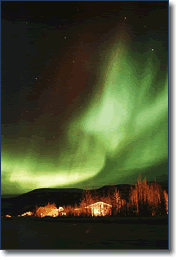
The Aurora Borealis is created by magnetic particles falling from the sun when a
storm bursts out of a sunspot and the particles bounce off of the earth’s protective
atmosphere. However, they seem to be much more magical than that.
The name Aurora means goddess of the dawn, Borealis refers to its location in the
sky. They are also called the Northern Lights and can be seen during the winter
season in Alaska as well as several other countries including Germany. These same
lights shows can be seen by people down in the Southern Hemisphere. However,
they are called Aurora Australis or the Southern Lights.
The best viewing locations for the Northern Aurora can be found between the cities
of Fairbanks and Borrow Alaska. Although, there have been several wonderful
photographs of the Aurora taken from Circle Alaska. The Aurora Borealis can be
seen every winter, but the solar-cycle brings the best viewing of the Northern
Lights to Alaska every 11 years. The last time the solar-cycle was at its peak was the
winter of 2000.
There are several touring companies and rustic lodges that offer Northern Lights
packages. These are of course offered during the winter. They usually include a
room, meals and an Aurora forecast. The forecast is given so the guests know when
it’s the best time to brave the cold and see the spectacular show in the sky.
10,000 years ago. Located at latitudes 55° to 70° North, the tundra is a vast and
treeless land which covers about 20% of the Earth's surface, circumnavigating the
North pole. It is usually very cold, and the land is pretty stark. Almost all tundras are
located in the Northern Hemisphere. Small tundra-like areas do exist in Antarctica in
the Southern Hemisphere, but because it is much colder than the Arctic, the ground
is always covered with snow and ice. Conditions are not right for a true tundra to
form. Average annual temperatures are -70°F (-56°C).
Tundra comes from the Finnish word "tunturia", which means a barren land. The
ground is permanently frozen 10 inches to 3 feet (25 to 100 cm) down so that trees
can't grow there. The bare and sometimes rocky ground can only support low
growing plants like mosses, heaths, and lichen. In the winter it is cold and dark and
in the summer, when the snow and the top layer of permafrost melt, it is very soggy
and the tundra is covered with marshes, lakes, bogs and streams that breed
thousands of insects and attract many migrating birds.
The main seasons are winter and summer. Spring and fall are only short periods
between winter and summer. The tundra is the world's coldest and driest biomes.
The average annual temperature is -18° F (-28° C). Nights can last for weeks when
the sun barely rises during some months in the winter, and the temperature can
drop to -94° F (-70° C). During the summer the sun shines almost 24 hours a day,
which is why the Arctic is also called the Land of the Midnight Sun. Summer are
usually warm. Temperatures can get up to 54° F (12° C), but it can get as cold as 37°
F (3° C). Average summer temperatures range from 37° to 60°F (3° to 16°C).
The Arctic tundra is also a windy place and winds can blow between 30 to 60 miles
(48 to 97 kilometers) per hour. Of the North American, Scandinavian and Russian
tundras, the Scandinavian tundra is the warmest, with winter temperatures
averaging 18°F (-8°C)
The tundra is basically like a desert when it comes to precipitation. Only about 6 - 10
inches of precipitation (mostly snow) fall each year. Below the soil is the tundra's
permafrost, a permanently frozen layer of earth. During the short summers the top
layer of soil may thaw just long enough to let plants grow and reproduce. Since it
can't sink into the ground, water from melting permafrost and snow forms lakes and
marshes each summer.
There is barely any vegetation in the tundra, only about 1,700 different species,
which isn't very much. These are mostly shrubs, sedges, mosses, lichens and
grasses. There are about 400 varieties of flowers. The growing season is only about
50 to 60 days long. There are no trees, except for some birches in the lower
latitudes. The ground is always frozen beneath the top layer of soil, so trees can't
send their roots down. Willows do grow on some parts of the tundra but only as low
carpets about 3 inches (8 cm) high. Most plants grow in a dense mat of roots which
has developed over thousands of years. The soil is very low in nutrients and
minerals, except where animal droppings fertilize the soil.
Surprisingly there are animals in the tundra. Although there isn't a lot of biodiversity,
only 48 species of land mammals are found on the tundra, there are a lot of each
species. These consist of slightly modified shrews, hares, rodents, wolves, foxes,
bears and deer. There are huge herds of caribou in North America (known as
reindeer in Eurasia) which feed on lichens and plants. There are also smaller herds
of musk-oxen. Wolves, wolverines, arctic foxes, and polar bears are the predators
of the tundra. Smaller mammals are snowshoe rabbits and lemmings. There aren't
many different species of insects in the tundra, but black flies, deer flies,
mosquitoes and "no-see-ums" (tiny biting midges) can make the tundra a miserable
place to be in the summer. Mosquitoes can keep themselves from freezing by
replacing the water in their bodies with a chemical called glycerol. It works like an
antifreeze and allows them to survive under the snow during the winter. The marshy
tundra is a great place for migratory birds like the harlequin duck, sandpipers and
plovers.
The tundra is one of Earth's three major carbon dioxide sinks. A carbon dioxide sink
is a biomass which takes in more carbon dioxide than it releases. Carbon dioxide is
a greenhouse gas that contributes to global warming. During the short summer
tundra's plants take in carbon dioxide, sunlight and water in the process of
photosynthesis. Plants normally give off carbon dioxide after they die and
decompose. But because of the short, cool summer and freezing winter
temperatures, plants can't decompose. Remains of plants thousands of years old
have been found in the tundra permafrost. In this way the tundra traps the carbon
dioxide and removes it from the atmosphere. Today global warming is melting the
permafrost of the tundra and every year several feet of tundra are lost. As the
tundra melts, the plant mass decomposes and returns carbon dioxide to the
atmosphere.
The tundra is a very fragile environment. The extremely cold temperatures makes it
a difficult environment to survive in during the winter, and plants and animals have
a hard time coping with any extra stresses and disturbances. More people moving
to the tundra to work in the mines and oil rigs have created towns and more roads.
Some animal's movements to traditional feeding and denning grounds have been
disrupted by these obstacles. When they try to pass through a town they are often
scared away or shot. With their feeding patterns disrupted, many polar bears have
starved. The Alaskan oil pipeline was built across a caribou migration route. In some
places the pipeline has been raised above the ground so the caribou can pass
under it. Pesticides have been used to control the hordes of insects. Thousands of
migrating birds come to the tundra because of the abundant insects. Through the
food chain the pesticides reach many of the animals that live on the tundra.
Pollution from mining and drilling for oil has polluted the air, lakes and rivers. The
land around some nickel mines in Russia has become so polluted that the plants in
the surrounding area have died. Footprints and tire tracks can be visible for many
years after they were made. When the sun hits the ruts it causes the permafrost to
melt. This causes erosion and the ruts get bigger, and eventually the ruts turn into
gullies. Tracks made during WW II have grown so large that some of them are now
lakes.
The tundra is not a cold and useless wasteland. It is a very fragile environment and
the plants and animals that have made their home on the tundra biome have made
some incredible adaptations to the long, cold winters and the short but abundant
summers. They live on a precarious edge and the smallest stresses can bring about
their destruction.
Health Issues
The tundra has a very extreme climate. The intense cold presents many problems if
you are not prepared. In any situation where extreme cold is present, hypothermia is
a risk you take. Hypothermia is the lowering of the body's core temperature. There
are two types of hypothermia, acute and chronic. Acute hypothermia is the rapid
lowering of the body's core temperature. Chronic hypothermia is the slow lowering
of the body's core temperature. If the temperature drop occurs in less than four
hours it is acute, otherwise it is chronic. Acute hypothermia is also called immersion
hypothermia and typically occurs when a person is in cold water. It is important to
note the difference between the two since treatment will be different. Hypothermia
is considered severe when the body's core temperature drops below 90 degrees F,
and mild from normal body temperature to 90 degrees F.
Frostbite is another problem in areas of extreme cold. Frostbite is caused by
exposure to severe cold. Frostbite occurs more often when the wind is blowing,
quickly taking heat from the body. The ears, cheeks, nose, toes, and fingers are
frostbitten the most frequently. When the part of the body is exposed to cold, the
blood vessels constrict. When this occurs the blood supply to the chilled parts
decreases and the tissues don't get the warmth they need.
Alaska's Northern Lights
The Aurora Borealis is created by magnetic particles falling from the sun when a
storm bursts out of a sunspot and the particles bounce off of the earth’s protective
atmosphere. However, they seem to be much more magical than that.
The name Aurora means goddess of the dawn, Borealis refers to its location in the
sky. They are also called the Northern Lights and can be seen during the winter
season in Alaska as well as several other countries including Germany. These same
lights shows can be seen by people down in the Southern Hemisphere. However,
they are called Aurora Australis or the Southern Lights.
The best viewing locations for the Northern Aurora can be found between the cities
of Fairbanks and Borrow Alaska. Although, there have been several wonderful
photographs of the Aurora taken from Circle Alaska. The Aurora Borealis can be
seen every winter, but the solar-cycle brings the best viewing of the Northern
Lights to Alaska every 11 years. The last time the solar-cycle was at its peak was the
winter of 2000.
There are several touring companies and rustic lodges that offer Northern Lights
packages. These are of course offered during the winter. They usually include a
room, meals and an Aurora forecast. The forecast is given so the guests know when
it’s the best time to brave the cold and see the spectacular show in the sky.
| The Tundra |


| Tundra Spirits Siberian Husky Rescue |
| Follow The Lead Dog |